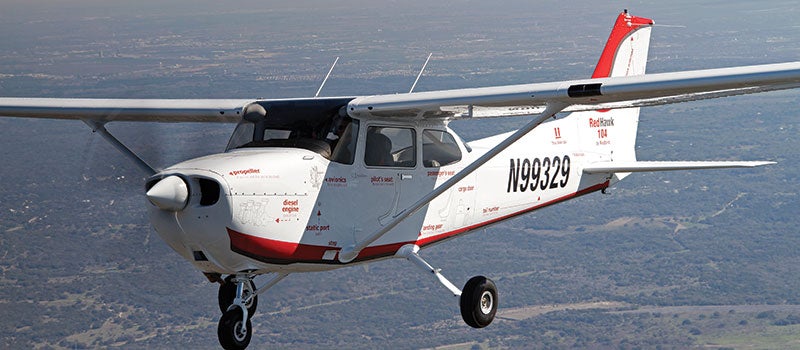
One of the greatest aircraft compromises — in a good way — in history is Cessna’s franchise model, the 172 Skyhawk. The iconic Kansas-based airplane maker has turned out more than 40,000 of the sheet-metal birds since the model’s debut in 1956, and the utilitarian singles continue to roll down the line and out the hangar doors. While the 172 has changed in a thousand little ways over the years, with new tail shapes, engines, seat tracks, radios and countless other tweaks, the shape, performance and flying qualities of the bird have remained very much the same. The Skyhawk remains a frisky runabout, a trusty trainer and a passable short-haul transportation airplane, the same today as in the beginning.
Cessna 172 Skyhawks Reborn

Key Takeaways:
- The iconic Cessna 172 Skyhawk remains a popular and reliable aircraft, but its high new purchase price (around $400,000) has created a demand for more affordable alternatives.
- Several companies are now offering refurbished older 172 airframes, bringing them to "like-new" condition with modern upgrades at a significantly lower cost than a brand-new model.
- A major focus of these refurbishment programs, and even new factory production (Cessna 172 JT-A), is the integration of turbodiesel engines that run on globally available and more cost-effective Jet-A fuel, offering reduced operating costs and simplified operation.
- These refurbishment efforts vary from comprehensive rebuilds with diesel engines and advanced avionics (e.g., Redbird Redhawk, Premier 172) to basic, cost-focused trainers (e.g., Sporty's 172LITE) or specific engine replacements.
Key takeaways sponsored by Aviator Pro | Start Your Training ->
See a mistake? Contact us.