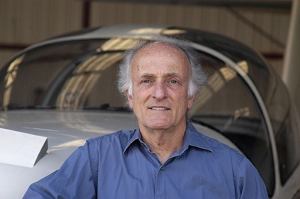
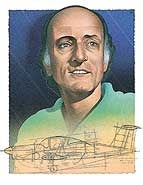


The late Ed Heinemann was a designer at Douglas Aircraft. He was responsible for the A-4 Skyhawk, a single-seater with an empty weight of less than 10,000 pounds that served for a long time as the smallest carrier-based attack aircraft in the Navy’s arsenal. It embodied the now-famous design philosophy emblazoned on Heinemann’s office wall: “Simplicate and Add Lightness.”
While the meaning of Heinemann’s motto seems clear enough, there is a subtlety to it. When designing a device like an airplane whose dimensions are a function of its weight, one finds that changes reverberate throughout the design. They earn compound interest. Take, for example, the A-4’s wing. With a span of only 27 feet it may at first have seemed too small to achieve the required approach speed for carrier landings. But making it small eliminated the need to fold it for hangar-deck storage. It also removed the weight of hinges and actuators and the complexity of controls, monitoring systems and backups; this in turn made it possible to pare a little material from the wing spars, landing gear and so on. In the end so much weight was saved that the target approach speed was possible after all.