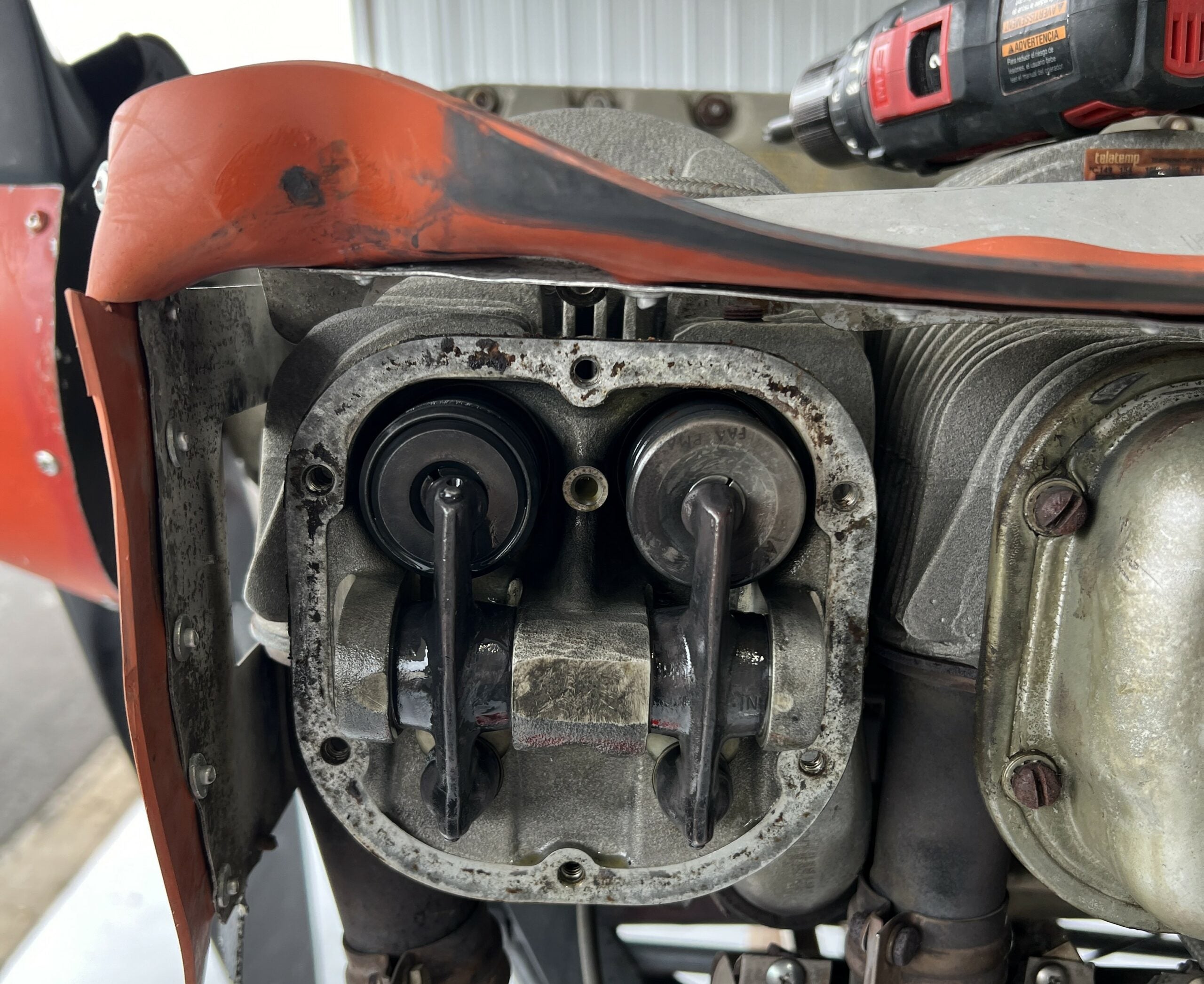
In aircraft maintenance, the line between preventative and unscheduled maintenance can often blur. [Courtesy: Richard Scarbrough]
Key Takeaways:
A Cessna 172 developed a rough-running engine, diagnosed by low cylinder temperatures (e.g., #4 and #6) indicative of sticking exhaust valves.
The unscheduled maintenance involved removing valve components using techniques like the "rope trick" or cylinder pressurization, followed by reaming the exhaust valve guides to clear carbon deposits.
The owner proactively reamed all exhaust valve guides, as sticking valves are primarily caused by high heat and carbon accumulation in the guides.
Recently, a GA pilot at Newnan-Coweta County Airport (KCCO) in Georgia pulled a Cessna 172 out of the hangar, ran through a quick preflight inspection, and yelled, “clear prop!”
He fired up the aircraft, only to find the Continental O-300-D engine started running rough. That was as far as it went. Mission aborted. The aircraft never left the ground.
CREATE A FREE ACCOUNT
Sign up to keep reading
Create a free account to continue. Already a member? Sign in below.
Richard is a US Navy Veteran, A&P Mechanic, and Embry-Riddle Aeronautical University alumni. His experience ranges from general and corporate aviation to helicopters, business jets, and commercial airliners. Former owner of a 145 repair station, he currently has an aerospace product management role and is a member of the T-C-Alliance. Follow him on X (Twitter) at @RScarCo.