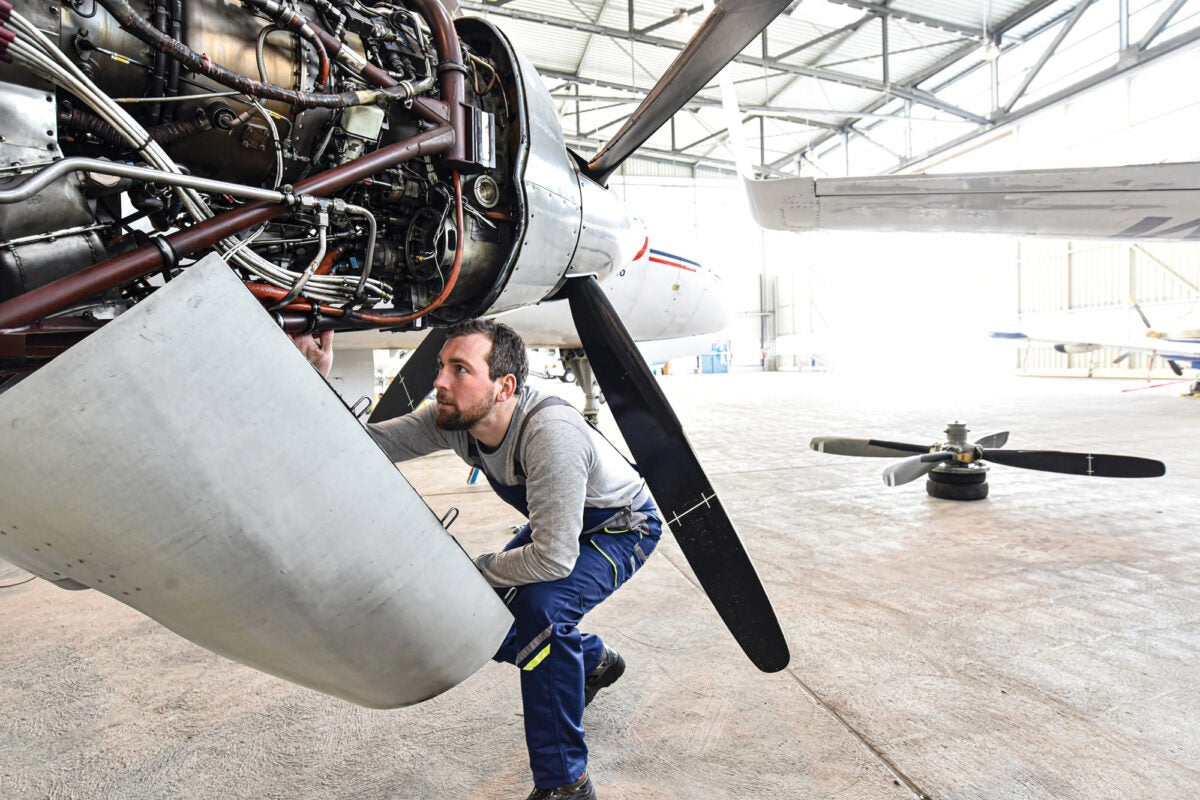
With a little due diligence, one can ascertain if a maintenance provider's tooling is in order and technical publications accessible. [Credit: Shutterstock]
Key Takeaways:
Choose aircraft mechanics and shops that possess official certifications (A&P, CFR Part 145), utilize calibrated and precise tools, and maintain access to up-to-date technical publications specific to your aircraft model.
Prioritize maintenance providers with an excellent safety record, free from FAA citations, and a transparent culture where employees are empowered to speak up about errors and honesty is paramount; it's advisable to visit the shop to observe its operations and trust your instincts.
Aircraft maintenance is a touchy topic around the airport. There is no shortage of opinions on maintaining aircraft. Just ask them, and they will be eager to share.
Working on airplanes is like the Wild West sometimes. You have the good, the bad, and the ugly. Here are the top five attributes that should indicate your mechanic or shop is operating in the green:
CREATE A FREE ACCOUNT
Sign up to keep reading
Create a free account to continue. Already a member? Sign in below.
Richard is a US Navy Veteran, A&P Mechanic, and Embry-Riddle Aeronautical University alumni. His experience ranges from general and corporate aviation to helicopters, business jets, and commercial airliners. Former owner of a 145 repair station, he currently has an aerospace product management role and is a member of the T-C-Alliance. Follow him on X (Twitter) at @RScarCo.