

Our son and his family have a house on a ridge. On both sides, oak-forested slopes sink steeply into shaded canyons. Surrounded, even below, by open space, the place is congenial to birds. Particularly conspicuous are the frantically active red-capped acorn woodpeckers that dash around, noisily testing the trees and utility poles, and the little stiff-tailed industrious wrens that work the ground. One big, many-trunked oak, right next to the house, scintillates in the early morning with a polyglot crowd of unseen songbirds. Afternoon brings the shrill complaints of red-tailed hawks, night the velvet interrogatives of owls.
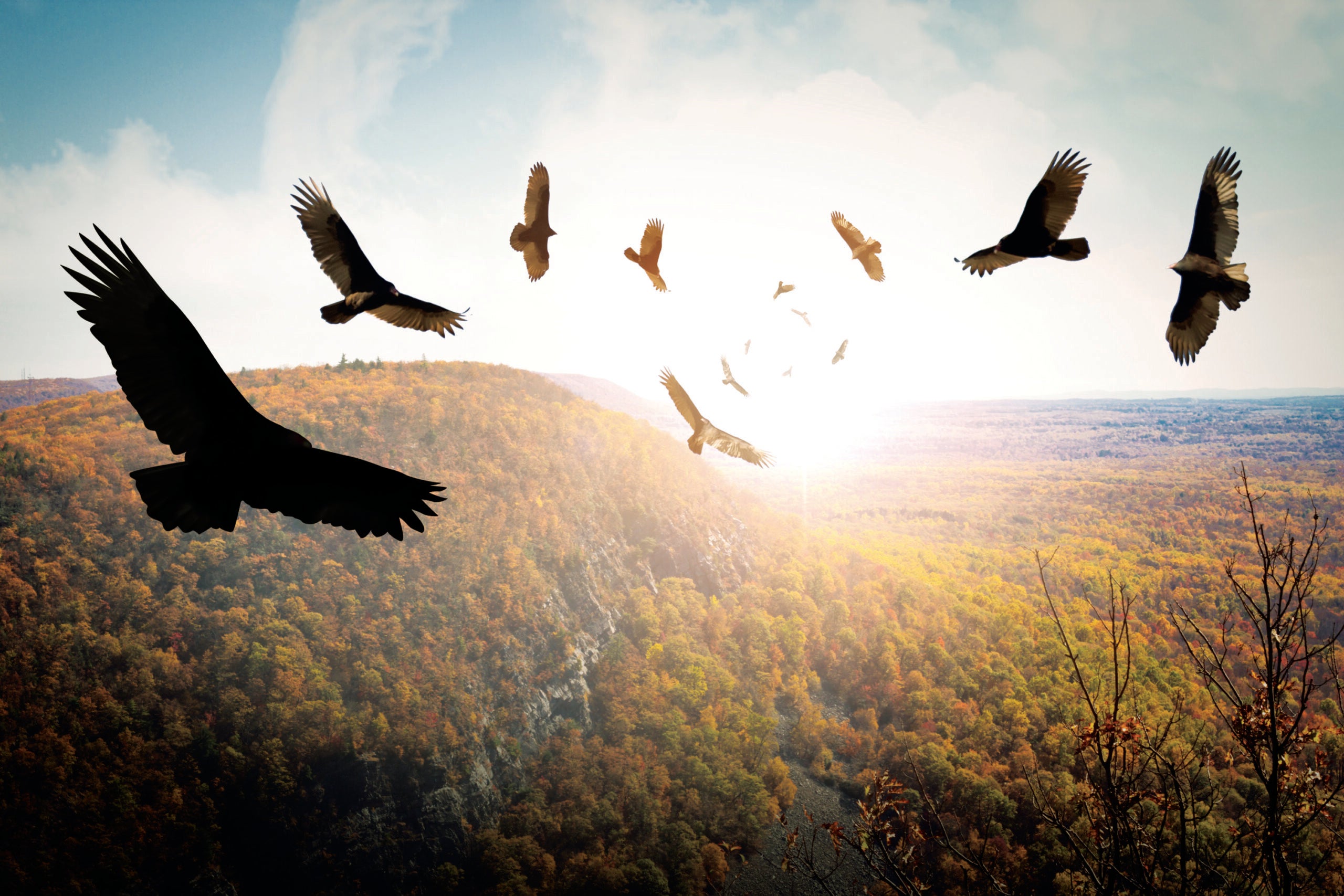
Most sublime, however, are the turkey vultures—ugly, roadkill-gobbling, baldhead, wryneck creatures, but calm and silent and steady in their flight like no others. When they are airborne, their repulsive heads are small and inconspicuous; you see mainly the broad black wings skating with effortless grace, tip feathers spread like a musician’s fingers strumming an inaudible air.