














Register

Aircraft Building Has Come Out of the Woods

Timber holds a special place as the primordial material in airplane construction.

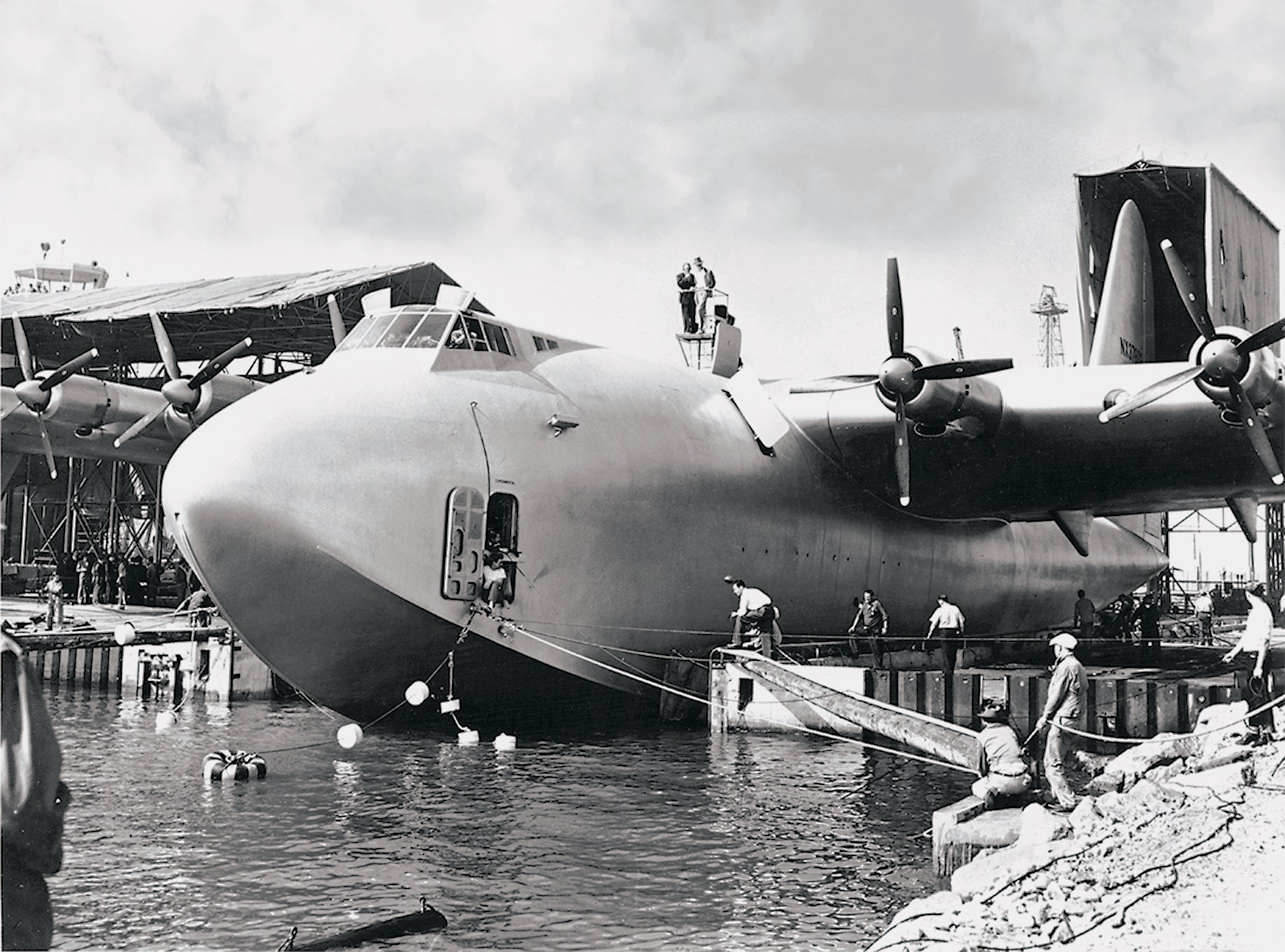
American aviator Howard Hughes (in hat) atop his flying boat the Spruce Goose (a Hughes H-4 Hercules), directing operations for the launch at Long Beach, California, on November 6, 1947. Here the aircraft is towed away from its dry dock on Terminal Island. [Library of Congress]
Gemini Sparkle

Key Takeaways:

  • The Bell XP-77, a wooden WWII fighter, highlighted the challenges of wood construction, underperforming partly due to prevailing cultural biases against the material in the U.S.
  • Historically significant, wood was a common aircraft material offering benefits like cost-effectiveness, repairability, and smooth surfaces, and avoiding metal fatigue issues.
  • Acceptance of wood construction was heavily influenced by cultural biases: the U.S. perceived metal as modern, while Britain, with its artisan culture, was more open to wooden aircraft like the de Havilland Mosquito.
  • Despite its historical utility and specific advantages, wood construction, even for ambitious projects such as Howard Hughes' "Spruce Goose," was ultimately regarded as a relic of the past in the evolving landscape of aviation.
See a mistake? Contact us.

Among the volumes crumbling on my bookshelves is one entitled American Combat Planes, by the late historian Ray Wagner. Originally published in 1960, it presents trading card-sized photos of countless airplanes, together with their specifications and a running narrative of the history of American military aviation, beginning with World War I. From time to time, when leafing through it in search of something else, I have happened upon a sweet-looking little airplane incongruously wedged between the school bus-sized Republic XP-72 and General Motors XP-75.

This Article First Appeared in FLYING Magazine

If you're not already a subscriber, what are you waiting for? Subscribe today to get the issue as soon as it is released in either Print or Digital formats.

Peter Garrison

Peter Garrison taught himself to use a slide rule and tin snips, built an airplane in his backyard, and flew it to Japan. He began contributing to FLYING in 1968, and he continues to share his columns, ""Technicalities"" and ""Aftermath,"" with FLYING readers.

Ready to Sell Your Aircraft?

List your airplane on AircraftForSale.com and reach qualified buyers.

List Your Aircraft
AircraftForSale Logo | FLYING Logo
Pilot in aircraft
Sign-up for newsletters & special offers!

Get the latest stories & special offers delivered directly to your inbox.

SUBSCRIBE
