
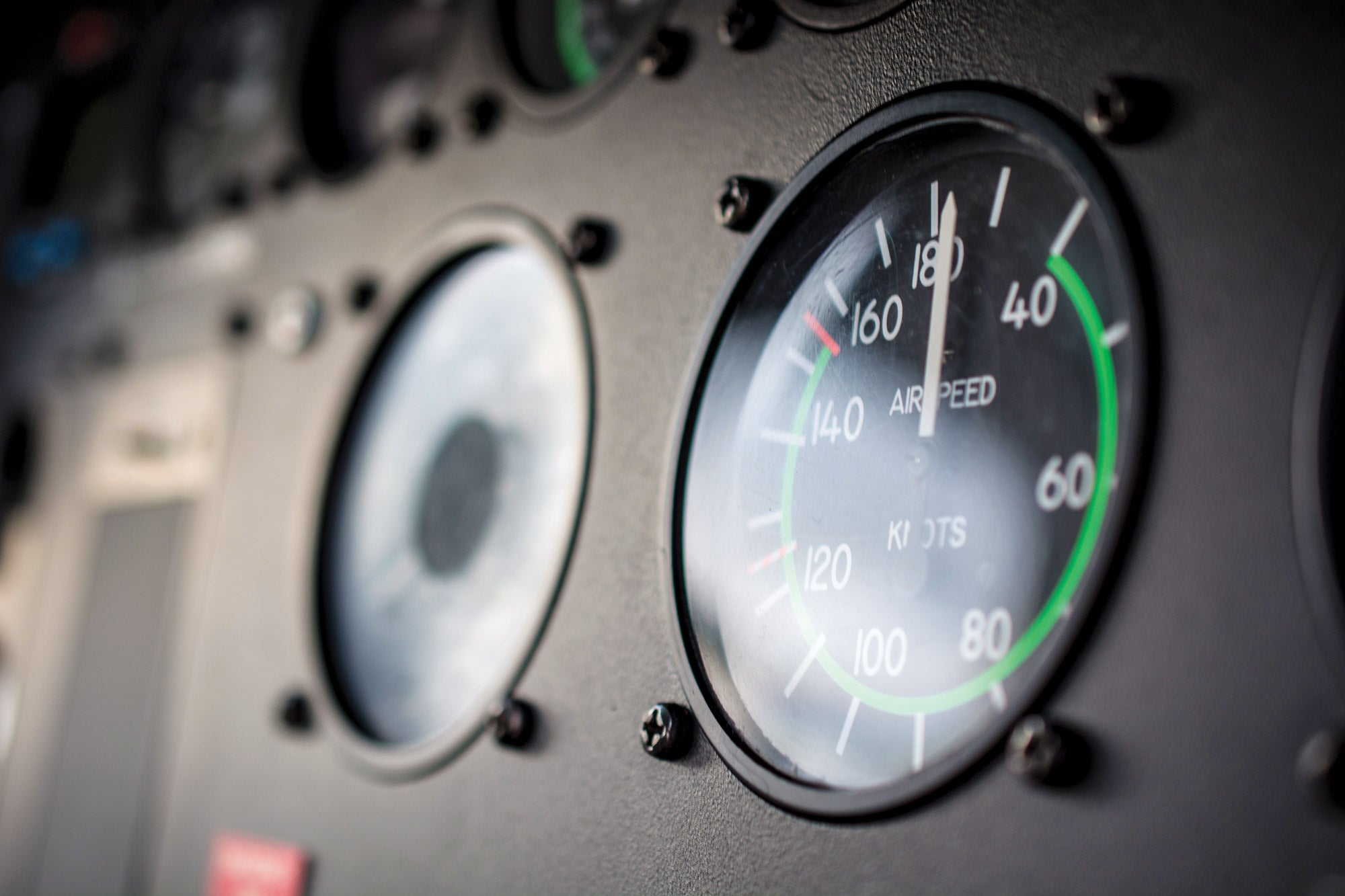
The airspeed indicator may be the oldest and most fundamental of the flight instruments, but it is also the one least suited to its job, which is primarily not to tell us how fast we are going but rather where we are in the flight envelope. It is pleasant to know, as we cruise along, that we are indicating 137 knots; but the airspeed indicator is most important at low speeds, close to the stall, and it is there that it is most likely to play us false.
Kill All the Airspeed Indicators

Key Takeaways:
- Airspeed indicators are flawed tools for managing the flight envelope at lower speeds because critical metrics like stall speed fluctuate significantly with aircraft weight, G-loading, and turbulence.
- Angle of attack and lift fraction directly correspond to aircraft maneuvering limits, making a standardized gauge showing the percentage of available lift (from 0 to 100) much safer and consistent across all aircraft types.
- While airspeed indicators remain necessary for dynamic pressure limits and ATC compliance, cockpit instrumentation and flight training should be modernized to make lift-fraction gauges primary.
Key takeaways sponsored by Aviator Pro | Start Your Training ->
See a mistake? Contact us.