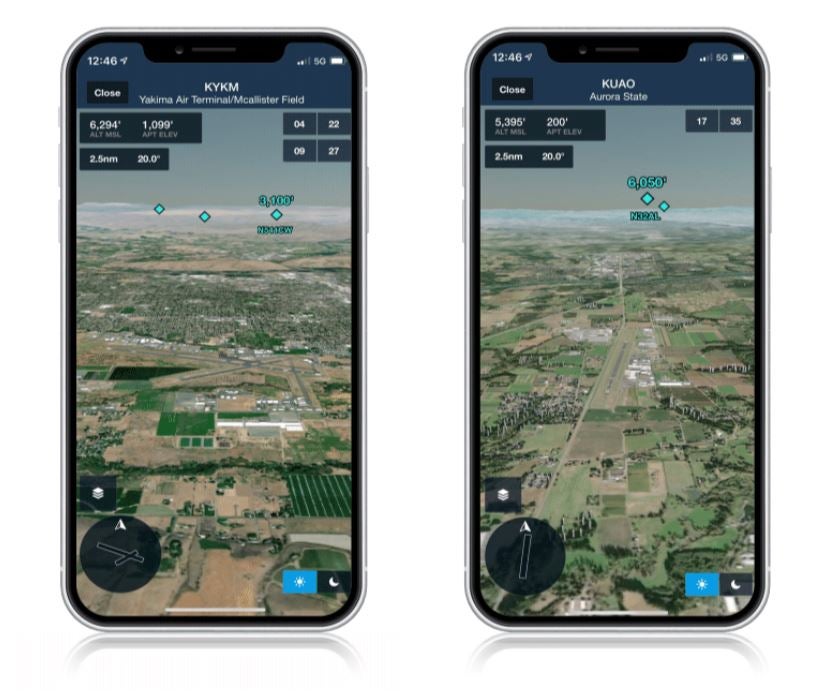


I admit flying into unfamiliar airports has caused me anxiety and confusion in the past. If the proverb is true that “familiarity breeds contempt,” new airports still command all my respect. I guess a big part of this is not knowing what to expect.
Back at my home airport in Daytona Beach, Florida (KDAB), I’d mastered all the visual navigation aids that had come to serve as cues for my flying. For example, to fly the RNAV Runway 16 approach at that airport, a local hospital positioned 5 miles north of the airport was my signal to establish a steady, 500 fpm descent with 10 degrees of flaps—which would take you right in. If you wanted to circle-to-land on Runway 7L, here’s what you’d do: You only had to wait until you were adjacent to the Daytona International Speedway, at which point you could make a turn left and fly towards I-95 south until the nose of your airplane touched the road. With Daytona’s 10,500-foot primary runway now on your left—provided that you leveled off well at your circling altitude—you’d gradually bring the power almost to idle, confirm that your gear and final flaps were down, and you’d be right on the numbers. With the visual cues guiding me along the way, my rehearsal worked every time, whether day or night. Whenever I had to teach that sequence to students, I was like a drill sergeant training recruits how to march in step.