Operation Vigilant Storm, a four-day training event from October 31 to November 4, is designed to enhance combat readiness and interoperability between the U.S. Air Force and some of its allies in the Asia-Pacific region.
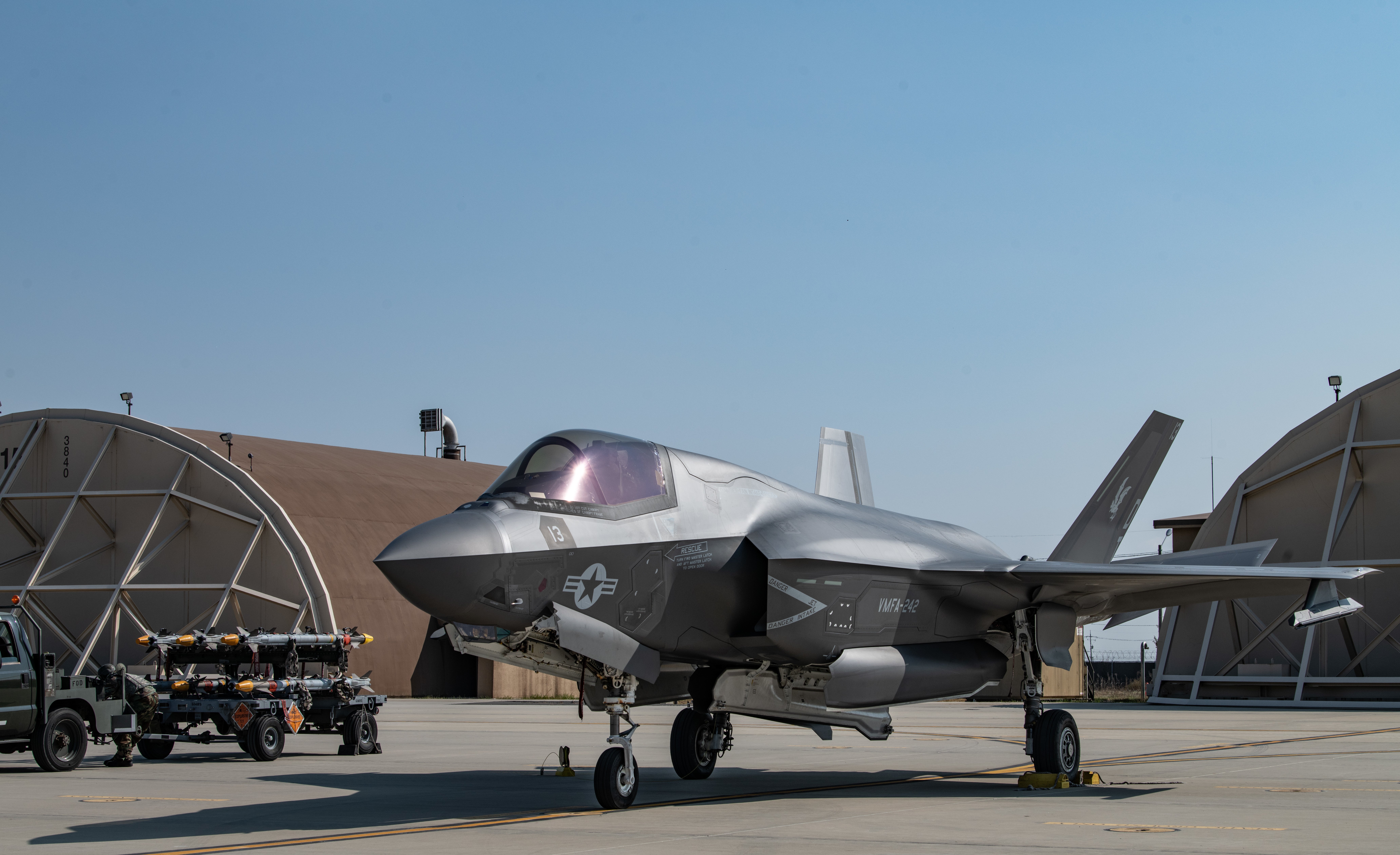
A U.S. Marine Corps F-35 Lightning II from Marine Fighter Attack Squadron (VMFA) 242, out of Iwakuni, Japan, parks at Kunsan Air Base, Republic of Korea, Oct 31, 2022. (Courtesy: U.S. Air Force Staff Sgt. Sadie Colbert)
Key Takeaways:
Operation Vigilant Storm is a large-scale, four-day joint air exercise (Oct 31-Nov 4) involving the U.S., Republic of Korea, and supporting Australian forces, aimed at enhancing combat readiness and interoperability in the Asia-Pacific.
The drill features approximately 240 aircraft and thousands of service members conducting around 1,600 sorties, practicing major air missions like close air support and defensive counter air, alongside ground defense procedures.
North Korea's Foreign Ministry has strongly condemned the exercise as a rehearsal for invasion, threatening "more powerful follow-up measures" and recently firing ballistic missiles in response to such joint drills.
Operation Vigilant Storm, a four-day training exercise involving hundreds of aircraft and designed to enhance combat readiness and interoperability between the U.S. Air Force and some of its allies in the Asia-Pacific region.
The exercise is set to run from October 31 to November 4, and has already sparked opposition from North Korea’s Foreign Ministry.
CREATE A FREE ACCOUNT
Sign up to keep reading
Create a free account to continue. Already a member? Sign in below.
Michael Wildes holds a master’s degree in Logistics & Supply Chain Management, and a bachelor’s degree in Aeronautical Science, both from Embry-Riddle Aeronautical University. Previously, he worked at the university’s flight department as a Flight Check Airman, Assistant Training Manager, and Quality Assurance Mentor. He holds MEI, CFI & CFII ratings. Follow Michael on Twitter @Captainwildes.