











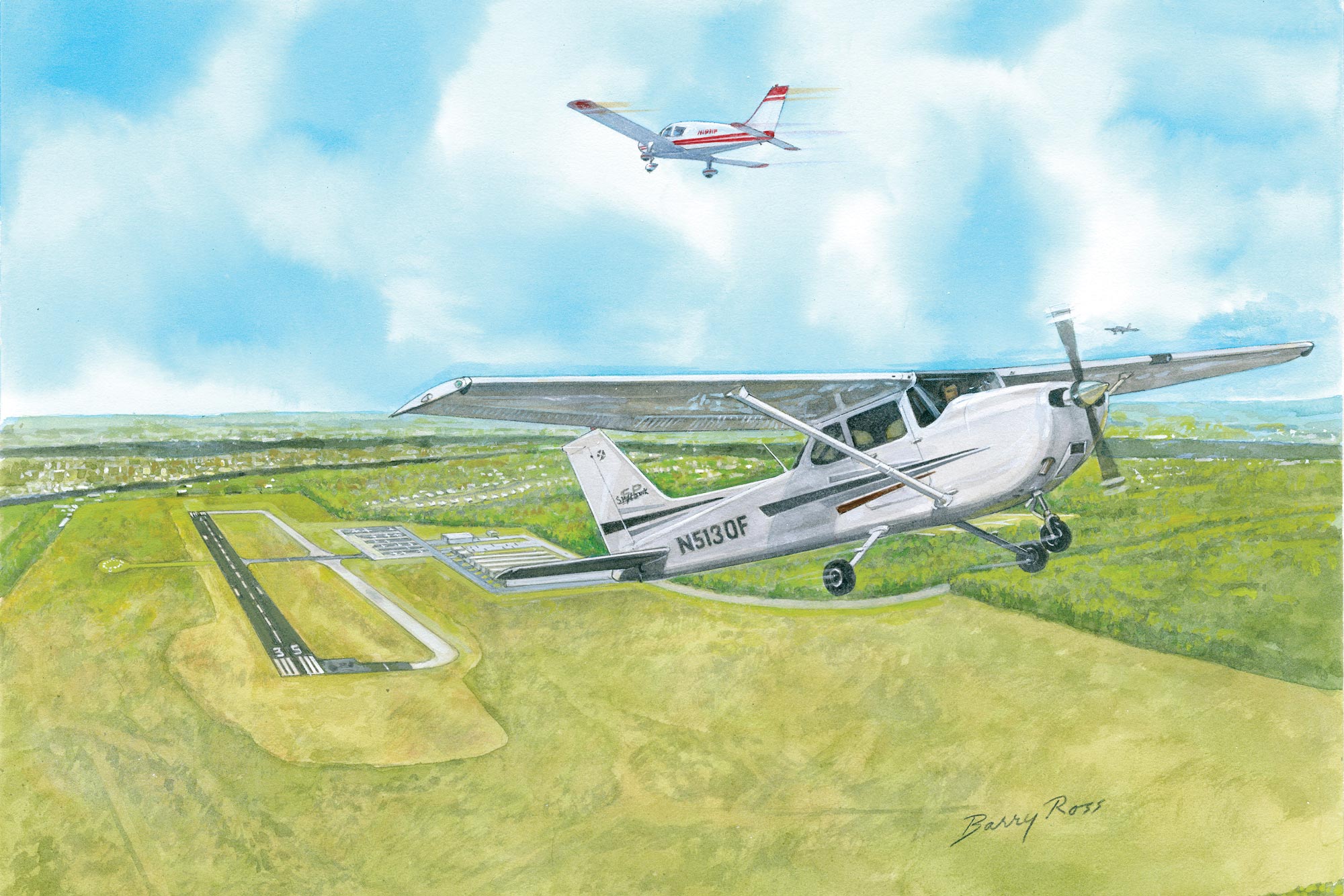
Pop quiz. You’re in the pattern at a nontowered airport on a calm day, announcing your turn to base for Runway 35, which is right traffic. Just then, you hear two other pilots make their first calls on the common traffic advisory frequency—one of them announcing they’re 2 miles out on a straight-in downwind for Runway 17, which is left traffic, while the other says they’re on a 4-mile base for 17.
It’s Called the CTAF for a Reason

Key Takeaways:
- The author experienced a dangerous close call at a nontowered airport due to multiple pilots making conflicting and unclear radio calls, highlighting the "Wild West" nature of uncontrolled airspace.
- Nontowered airports rely on pilots voluntarily acting as their own ATC through clear, timely, and consistent radio communication, a shared responsibility often poorly executed.
- The incident underscores the critical importance of conservative aeronautical decision-making and prioritizing safety over right-of-way rules when faced with uncertain and conflicting traffic situations.
Key takeaways sponsored by Aviator Pro | Start Your Training ->
See a mistake? Contact us.

