











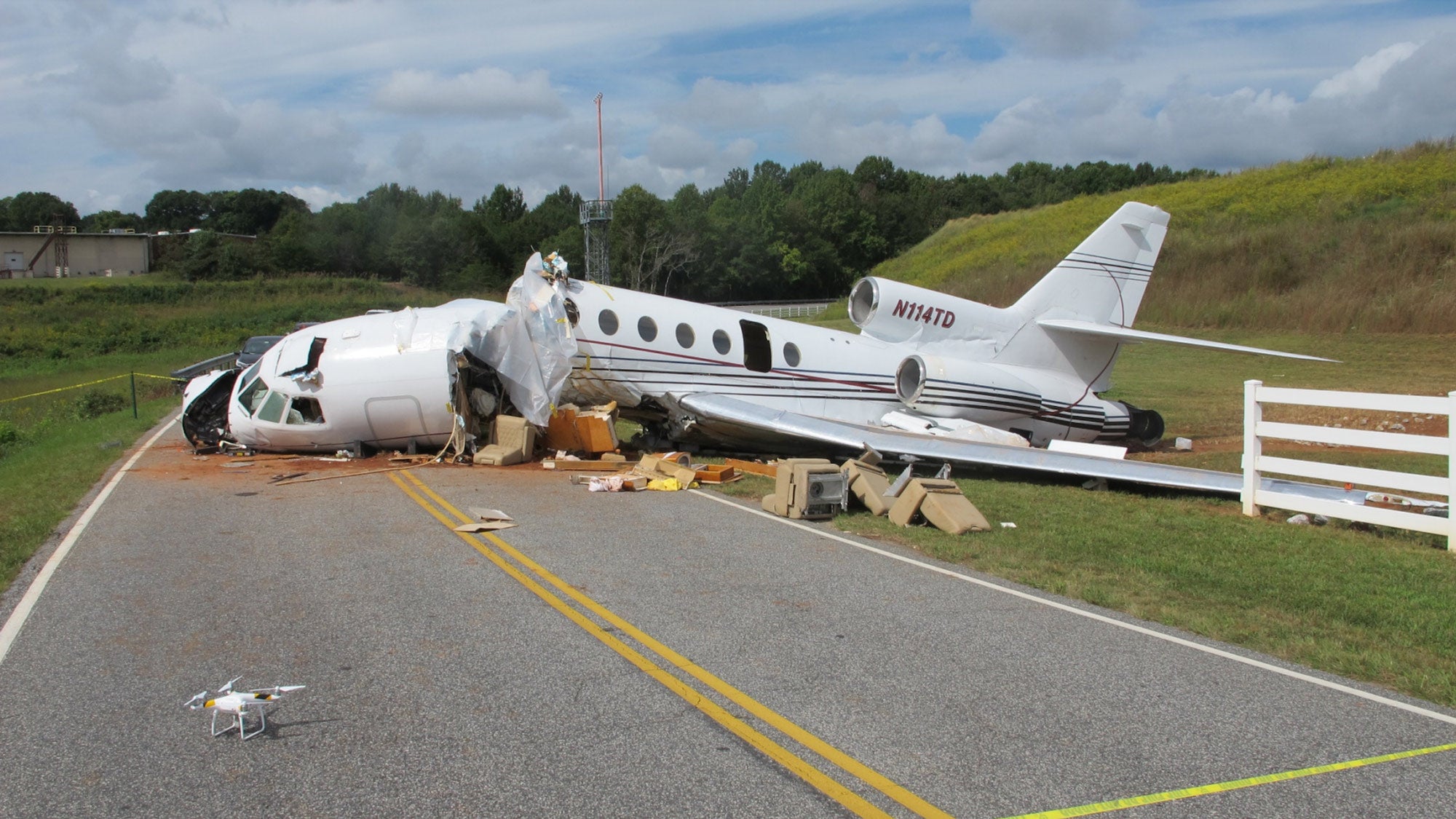
The National Transportation Safety Board determined the probable cause of the accident to be “The operator’s decision to allow a flight in an airplane with known, unresolved maintenance discrepancies, and the flight crew’s failure to properly configure the airplane in a way that would have allowed the emergency or parking brake systems to stop the airplane during landing.” While NTSB reports look directly at the technical aspects of accidents, there are often compelling stories hiding just beneath the surface.
NTSB Reports Don’t Always Tell the Entire Story

Key Takeaways:
- The NTSB determined the accident's probable cause was the operator allowing flight with known maintenance issues and the flight crew's failure to properly use the emergency or parking brake systems.
- The Dassault Falcon 50 had significant unresolved maintenance discrepancies, including an overdue landing gear overhaul and a known inoperative normal braking system, which was placarded.
- The flight crew attempted to use the malfunctioning normal braking system and failed to utilize the emergency braking or parking brake as described in the flight manual.
- Both pilots were improperly qualified for the Falcon 50 and the Part 135 operation; the captain had an SIC-only type rating limitation, and the flying pilot held only a private pilot certificate with no instrument or Falcon 50 ratings.
Key takeaways sponsored by Aviator Pro | Start Your Training ->
See a mistake? Contact us.

