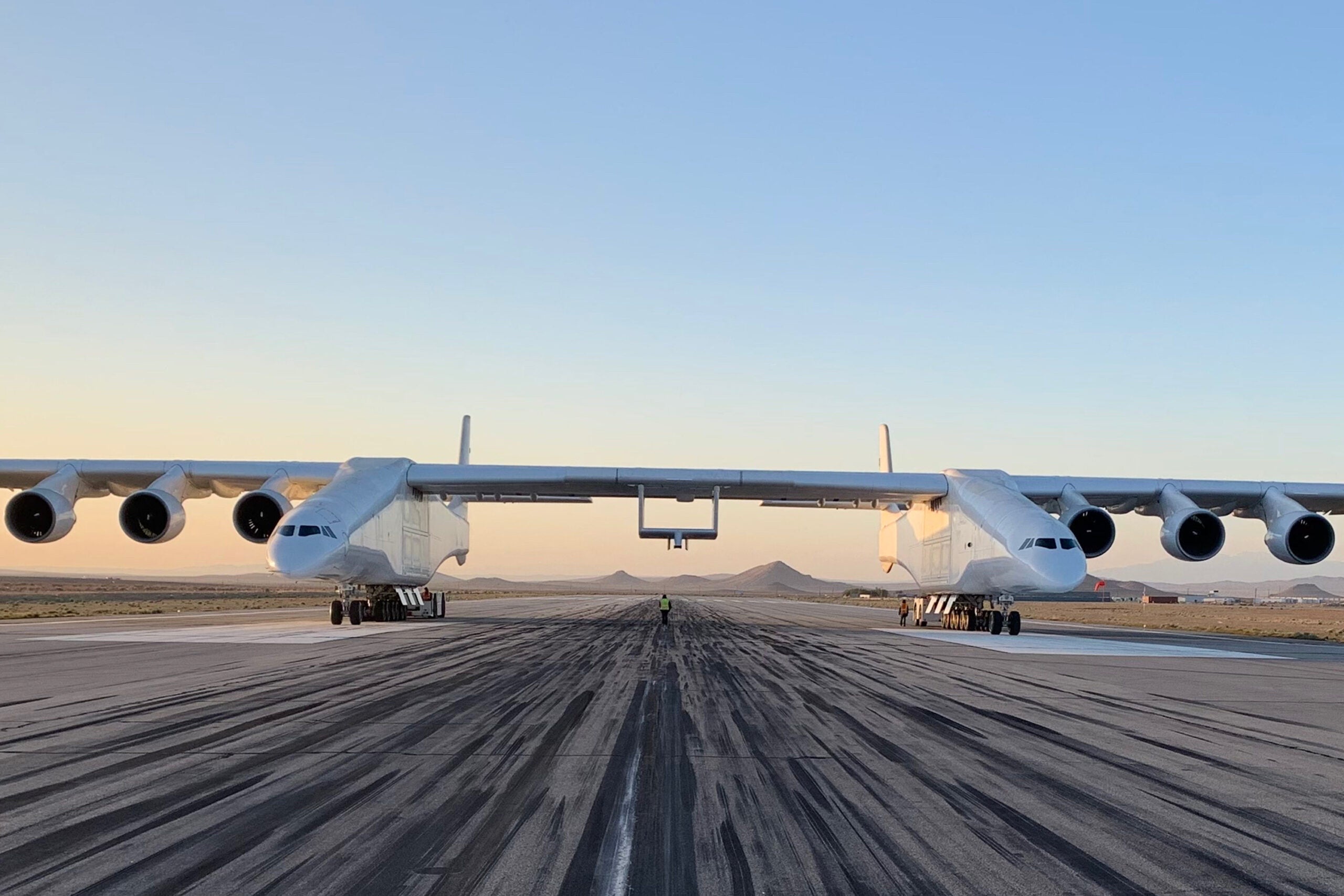
At Stratolaunch’s facility at California’s Mojave Air and Space Port (KMHV), engineers, technicians, and flight crews are preparing the world’s largest airplane for its next test flight. Here are a few key facts and figures highlighting the one-of-a-kind air-to-launch carrier airplane known as Roc.
At Stratolaunch’s facility at California’s Mojave Air and Space Port (KMHV), engineers, technicians, and flight crews are preparing the world’s largest airplane for its fifth test flight.
Roc, the twin-fuselage behemoth with a wingspan longer than an NFL football field, will have a new piece of equipment on board: a custom pylon attached to the airplane’s center wing.
CREATE A FREE ACCOUNT
Sign up to keep reading
Create a free account to continue. Already a member? Sign in below.
Thom is a former senior editor for FLYING. Previously, his freelance reporting appeared in aviation industry magazines. Thom also spent three decades as a TV and digital journalist at CNN’s bureaus in Washington and Atlanta, eventually specializing in aviation. He has reported from air shows in Oshkosh, Farnborough and Paris. Follow Thom on Twitter @thompatterson.