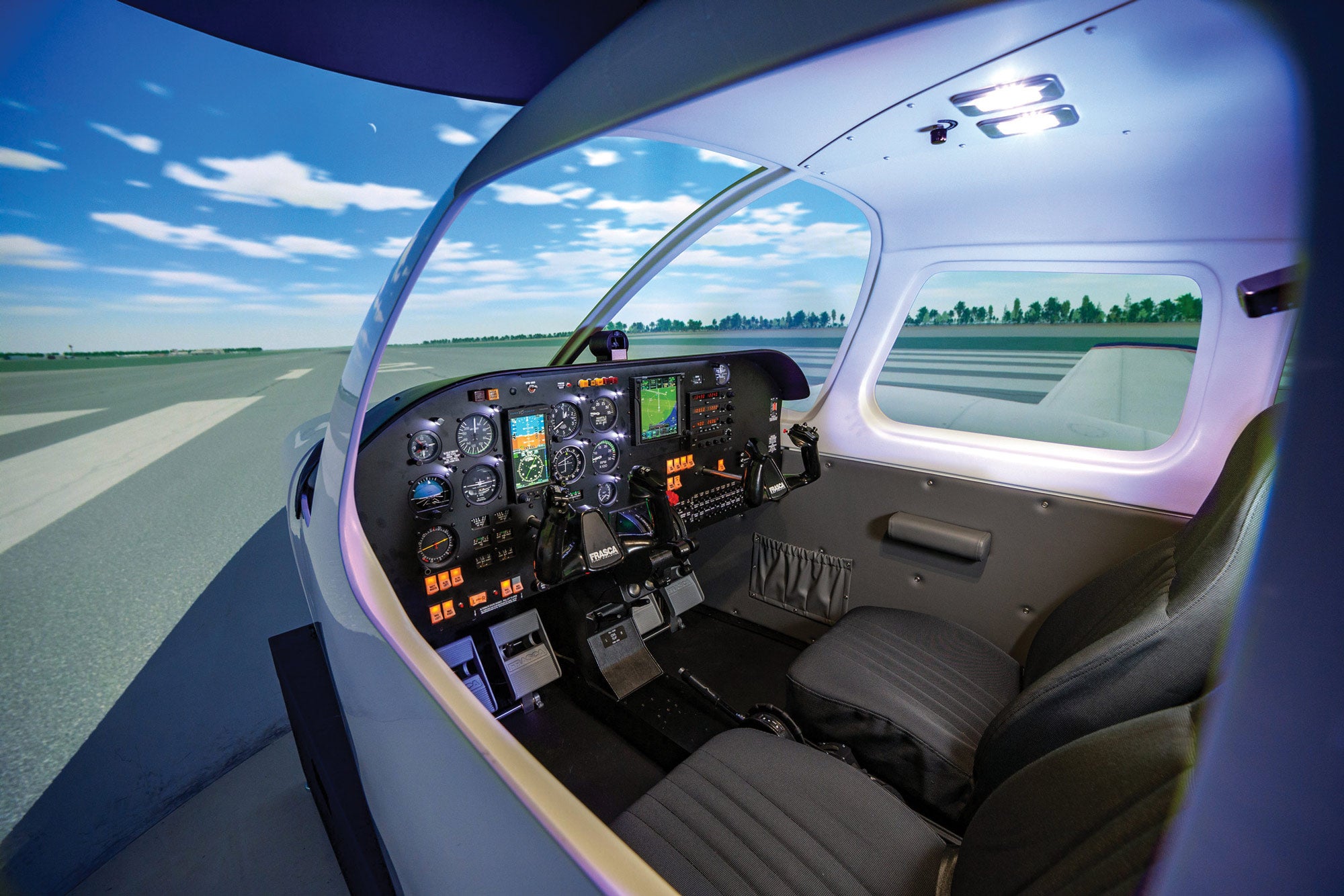
Cockpits make terrible classrooms. They are expensive, loud, quick to produce sensory overload, and there is always the potential for the “classroom” to collide with something else—such as another “classroom.” If you are looking for a less expensive, more productive path to learning to fly, consider utilizing an aviation training device, commonly referred to as a simulator.
Learning to Fly with a Flight Simulator

Key Takeaways:
- Aviation Training Devices (ATDs) offer a cost-effective and safer alternative to traditional flight training in real aircraft, reducing operational expenses and eliminating the risks associated with in-cockpit learning.
- ATDs accelerate skill acquisition by allowing learners to master procedures, aircraft systems (like G1000), and critical decision-making in a controlled environment, including practicing dangerous emergencies safely.
- The flexibility of ATDs enables instructors to pause lessons, repeat scenarios, and create highly tailored training sessions, drawing from real-world events or accident reports to enhance learning.
- The effectiveness of ATD training is significantly influenced by the instructor's communication skills, attitude, and ability to construct realistic, objective-driven scenarios that maximize educational return.
Key takeaways sponsored by Aviator Pro | Start Your Training ->
See a mistake? Contact us.