














Register

What You Need to Know About the James Webb Telescope

The massive JWST, as it's called, has been decades in the making and is scheduled to launch on Christmas Eve.

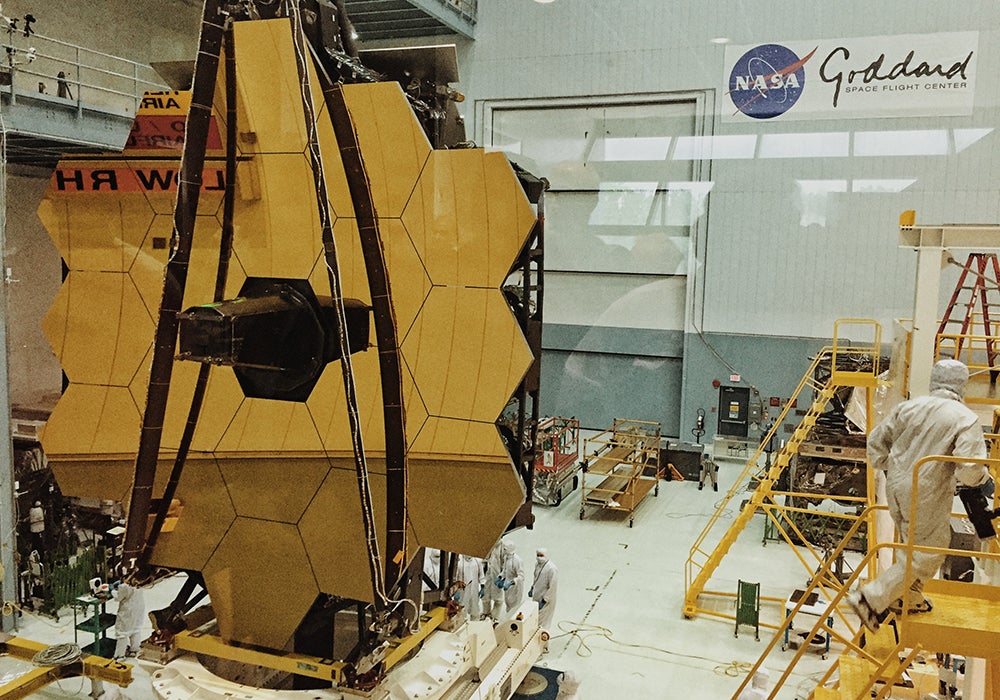
The JWST was conceptualized as the successor to the Hubble Space Telescope. Courtesy: NASA
Gemini Sparkle

Key Takeaways:

  • The James Webb Space Telescope (JWST) is the successor to Hubble, designed as the most powerful infrared telescope to observe the universe's first stars and galaxies by capturing faint, "redshifted" light.
  • Key features include gold-coated mirrors and a massive five-layer heat shield to maintain ultra-cold temperatures, operating a million miles from Earth at the Lagrange Point 2 (L2) orbit.
  • Its launch and deployment are highly complex, requiring the telescope to intricately fold into the Ariane 5 rocket and undergo a critical, unreparable two-week unfolding process in space.
See a mistake? Contact us.

The world is on the brink of a new age of space exploration, thanks to the decades-long development of NASA’s James Webb Space Telescope (JWST). Packed with cutting-edge technology, the massive telescope is set to launch next week.

But what makes the JWST so important? And why has it taken so long to produce? With those answers and more, here’s everything you need to know about the JWST.


Jeremy Kariuki

Jeremy attained his bachelor's in journalism and emerging media from Kennesaw State University. He also served in the Georgia Air National Guard as a C-130 Crew Chief for six years, holding an associate in aircraft maintenance technology.

Ready to Sell Your Aircraft?

List your airplane on AircraftForSale.com and reach qualified buyers.

List Your Aircraft
AircraftForSale Logo | FLYING Logo
Pilot in aircraft
Sign-up for newsletters & special offers!

Get the latest stories & special offers delivered directly to your inbox.

SUBSCRIBE