











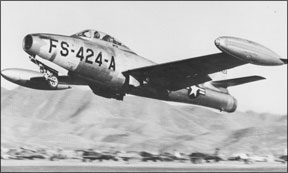
There are many stories about pilots loading jet fuel in a piston-engine aircraft, but using aviation gasoline in a jet engine is less dramatic. I had departed an air base in northern Japan on a cold January day, en route to a base in southern Japan, flying an F-84 fighter jet shortly after the end of the Korean War. During the flight at about 25,000 feet, I noticed the left tip tank was not feeding its main fuel tank. After landing at an emergency base in central Japan, the aircraft was refueled with 100-115 octane aviation gasoline, the only fuel available. While 288
The Correct Fuel
There are many stories about pilots loading jet fuel in a piston-engine aircraft, but using aviation gasoline in a jet engine is less dramatic. I had departed an air base in northern Japan on a cold January day, en route to a base in southern Japan, flying an F-84 fighter jet shortly after the end of the Korean War. During the flight at about 25,000 feet, I noticed the left tip tank was not feeding its main fuel tank. After landing at an emergency base in central Japan, the aircraft was refueled with 100-115 octane aviation gasoline, the only fuel available. While climbing out, I noticed the fuel was burning faster and at a higher engine temperature. The destination had a 100-foot ceiling and one mile visibility. Because of the rapid fuel burn, a diversion was out of the question. I made three ground-controlled radar approaches without seeing the runway because the controller kept losing me in clutter.

Key Takeaways:
- An F-84 pilot faced a severe fuel emergency compounded by refueling with aviation gasoline, leading to rapid fuel consumption and a challenging instrument landing in poor weather conditions.
- Upon landing, he narrowly avoided a head-on collision with another F-84 on the runway, an incident caused by a critical lack of coordination between air traffic control and radar controllers.
- The root cause of the initial fuel supply problem for both aircraft was water contamination (melted snow) in the fuel supply, which led to frozen fuel valves in the tip tanks.
Key takeaways sponsored by Aviator Pro | Start Your Training ->
See a mistake? Contact us.

