
It was a beautiful day. Light winds. Clear skies. Towering, snowcapped Rocky Mountain peaks surrounded the 9,000-foot runway at Eagle, Colorado, from which I was about to depart. I was at the controls of a Pilatus PC-12, a sizable single-engine turboprop built to carry thousands of pounds of people or gear. Today we were light. Just two people and full tanks.
Transitioning to Turboprops

Key Takeaways:
- Single-engine turboprops, despite their reliability and ease of normal operation, demand specialized transition training due to their advanced systems, higher speeds, and altitudes.
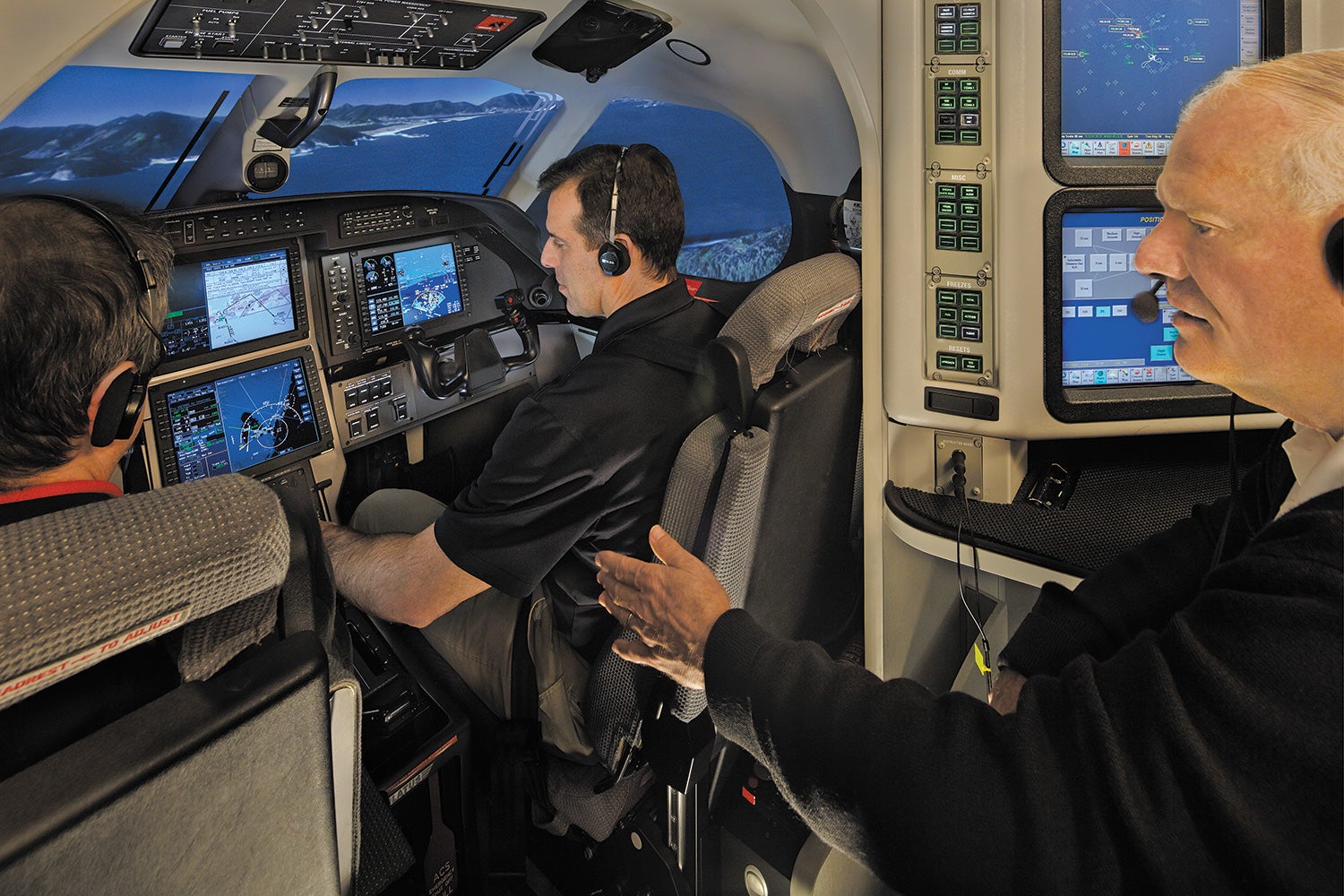
- Full-motion simulators are crucial for turboprop pilots to safely practice and internalize emergency procedures for critical, high-stress scenarios (e.g., engine failure, runaway trim, hypoxia) that are too dangerous to train for in a real aircraft.
- Even without an FAA type rating, insurance companies mandate extensive training for turboprop pilots, emphasizing deep competence and readiness for emergencies over basic flight skills.
Key takeaways sponsored by Aviator Pro | Start Your Training ->
See a mistake? Contact us.